
REDD +
Kenya’s REDD+ Framework provides the national structure for implementing activities that reduce emissions from deforestation and forest degradation, while promoting conservation, sustainable forest management, and enhancement of forest carbon stocks. Developed in line with international guidance under the UNFCCC and the Paris Agreement, the framework integrates policy, technical, and institutional arrangements to support climate mitigation and sustainable development. Kenya is implementing REDD+ through a phased approach—readiness, implementation, and results-based action—supported by systems for forest monitoring, safeguards reporting, and emissions accounting. The framework positions Kenya to access results-based climate finance while delivering environmental and socio-economic co-benefits.
Kenya’s National REDD+ Strategy is the country’s overarching policy document guiding efforts to address drivers of deforestation and forest degradation. Finalized in 2021 through a participatory and multi-stakeholder process, the strategy outlines priority actions including scaling up afforestation and landscape restoration, strengthening governance and enforcement, enhancing productivity of plantation forests, improving forest value chains, and mobilizing sustainable financing. The Strategy aligns with Kenya’s climate commitments and national development goals, providing a roadmap for coordinated implementation of REDD+ interventions across sectors and counties.
Kenya's REDD+ Nesting Guidelines
The National Forest Monitoring System (NFMS) is Kenya’s technical backbone for measuring, reporting, and verifying forest-related emissions and removals. The system integrates satellite-based land monitoring, the National Forest Inventory, and a centralized forest information platform to generate reliable data on forest cover changes and carbon stocks. By combining remote sensing and field-based measurements, the NFMS ensures transparency, accuracy, and consistency in REDD+ reporting. It supports national decision-making, international reporting obligations, and performance-based climate finance.
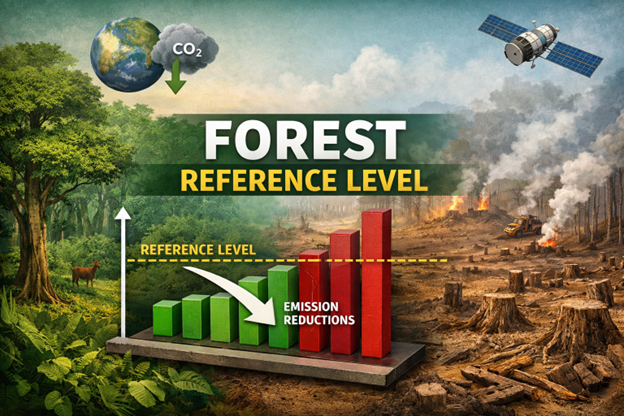
Kenya’s Forest Reference Level (FRL), submitted to the UNFCCC in 2020, establishes the benchmark against which REDD+ performance is measured. The FRL quantifies historical emissions and removals from key REDD+ activities, including deforestation, forest degradation, sustainable management of forests, and enhancement of carbon stocks. It defines forest parameters consistent with national circumstances and applies IPCC methodologies to estimate emissions from above- and below-ground biomass. The FRL provides the basis for calculating emission reductions and accessing results-based payments under international climate frameworks.
Report on the technical assessment of the proposed forest reference level of Kenya submitted in 2020
National Forest Level Report for REDD Plus in Kenya Implementation December 2019
The National Forest Reference Level for REDD+ Implementation August 2020
The Safeguards Information System (SIS) ensures that REDD+ implementation in Kenya respects social, environmental, and governance safeguards as required under international agreements. The SIS provides information on how safeguards are being addressed and respected, including protection of biodiversity, respect for community rights, transparency, and participation of stakeholders. By promoting accountability and minimizing risks, the SIS strengthens the environmental integrity and social sustainability of REDD+ activities across the country.
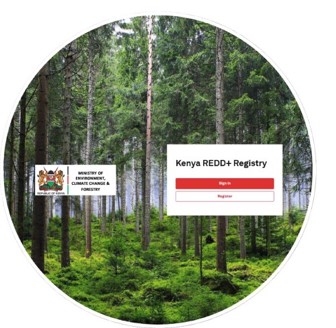
The Kenya REDD+ Registry is a transparent national platform for tracking REDD+ activities, emission reductions, and associated carbon credits. It ensures accurate recording of verified emission reductions, prevents double counting, and supports national reporting obligations. The Registry enhances coordination between national and project-level REDD+ initiatives and facilitates participation in carbon markets and results-based finance mechanisms. Through improved transparency and data management, the Registry strengthens Kenya’s credibility and readiness for climate finance opportunities.