
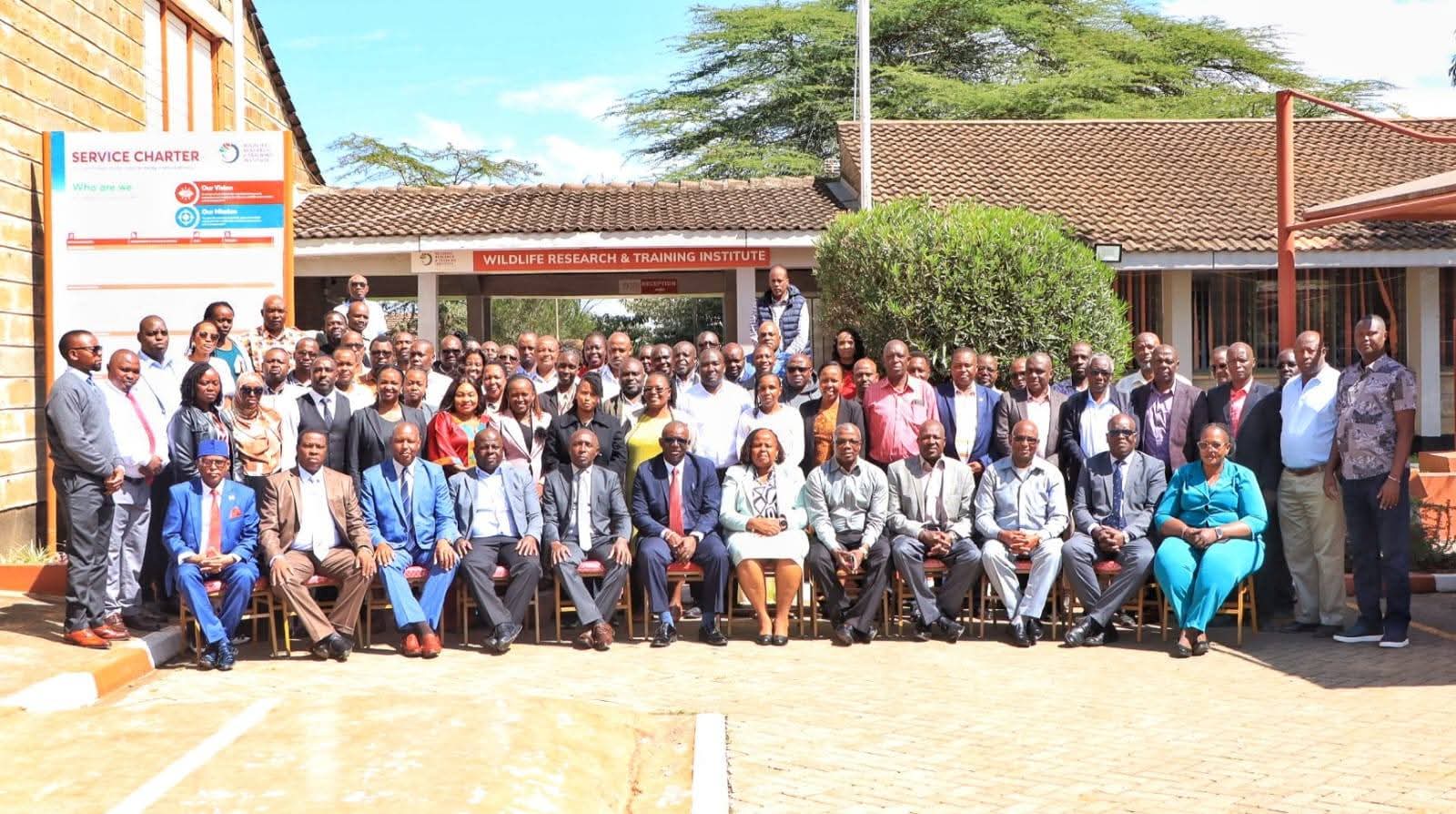
KEWASIP Engages County Leaders in Landmark Introductory Meeting in Naivasha
The Kenya Watershed Services Improvement Project (KEWASIP) National Project Coordination Unit convened a two-day county introductory meeting on March 17–18, 2026, bringing together national implementing entities at the county level and representatives from the 12 project counties.
KEWASIP is a five-year initiative implemented by the State Department for Forestry in partnership with the World Bank. The project became effective on December 23, 2025, and aims to expand sustainable land and watershed management while improving livelihoods across twelve counties: Baringo County, Marsabit County, Isiolo County, Samburu County, Laikipia County, Meru County, Kitui County, Tharaka Nithi County, Tana River County, Garissa County, Makueni County, and Kwale County.
The meeting, held at the Kenya Wildlife Service Training Institute, brought together key stakeholders including County Commissioners; Assistant Directors for Sub-Regional Coordination from the Water Resources Authority; County Wardens from the Kenya Wildlife Service; Assistant Regional Directors from the Kenya Forestry Research Institute; County Forest Conservators from the Kenya Forest Service; and County Directors from the National Environment Management Authority.
The engagement came at a critical stage as the project transitioned into implementation, providing a platform to brief stakeholders on planned activities and clarify their roles in delivery.
Opening the session, Forest Development Secretary George Tarus noted that KEWASIP is anchored in the National Landscape and Ecosystem Restoration Strategy, which targets the restoration of 10.6 million hectares of degraded landscapes by 2032.
He highlighted that the initiative aligns with the Government’s 15 Billion Trees Growing Initiative, aimed at accelerating environmental conservation and climate action across key ecosystems, including forests, water towers, agro-ecosystems, rangelands, wetlands, marine areas, and settled landscapes. He emphasized that the approach reflects a coordinated, multisectoral framework for ecosystem restoration and sustainable development.
Tarus reaffirmed the Government’s commitment to achieving Kenya’s environmental and climate goals through strengthened collaboration between national and county governments.
Addressing participants, KEWASIP Project Coordinator Winnie Musila outlined the project’s objectives, noting that KEWASIP will focus on improving watershed services through restoration of degraded landscapes and ecosystems while promoting climate-resilient and low-carbon development pathways.
Stakeholders committed to enhanced coordination among national implementing entities at the county level, alongside active community engagement. The meeting aligned roles and responsibilities and set the stage for coordinated and effective implementation of KEWASIP across the 12 target counties.