
NAKURU COUNTY STRENGTHENS GRASSROOT CLIMATE ACTION THROUGH FLLoCA PROGRAMME
Nakuru County is reinforcing its commitment to climate resilience through community-driven environmental initiatives under the Financing Locally-Led Climate Action (FLLoCA) Programme, with renewed focus on ecosystem restoration, tree growing and sustainable livelihoods.
During an engagement meeting at the County Government headquarters, the County Executive Committee Member for Water, Energy, Environment, Natural Resources and Climate Change, Nelson Tanui Maara, together with the County Chief Officer, Stella Mwaura, the County Climate Change Unit Coordinator, Grace, and officials from the State Department for Forestry led by Robert Nyambati of the Kenya Forestry Research Institute (KEFRI), reviewed the progress of ongoing climate action investments and explored strategies for accelerating restoration efforts across the county.
The meeting emphasized the importance of locally led climate solutions in addressing environmental challenges while enhancing livelihoods and strengthening community resilience to the impacts of climate change. Participants reaffirmed that empowering local communities remains central to achieving sustainable ecosystem restoration and the Government’s national target of growing 15 billion trees by 2032.
Discussions highlighted the growing role of communities, schools and local institutions in implementing climate action initiatives at the grassroots level. Key areas of focus included expanding community tree nursery networks, improving access to quality planting materials, promoting environmental awareness and strengthening partnerships to ensure FLLoCA investments continue delivering lasting environmental and socio-economic benefits.
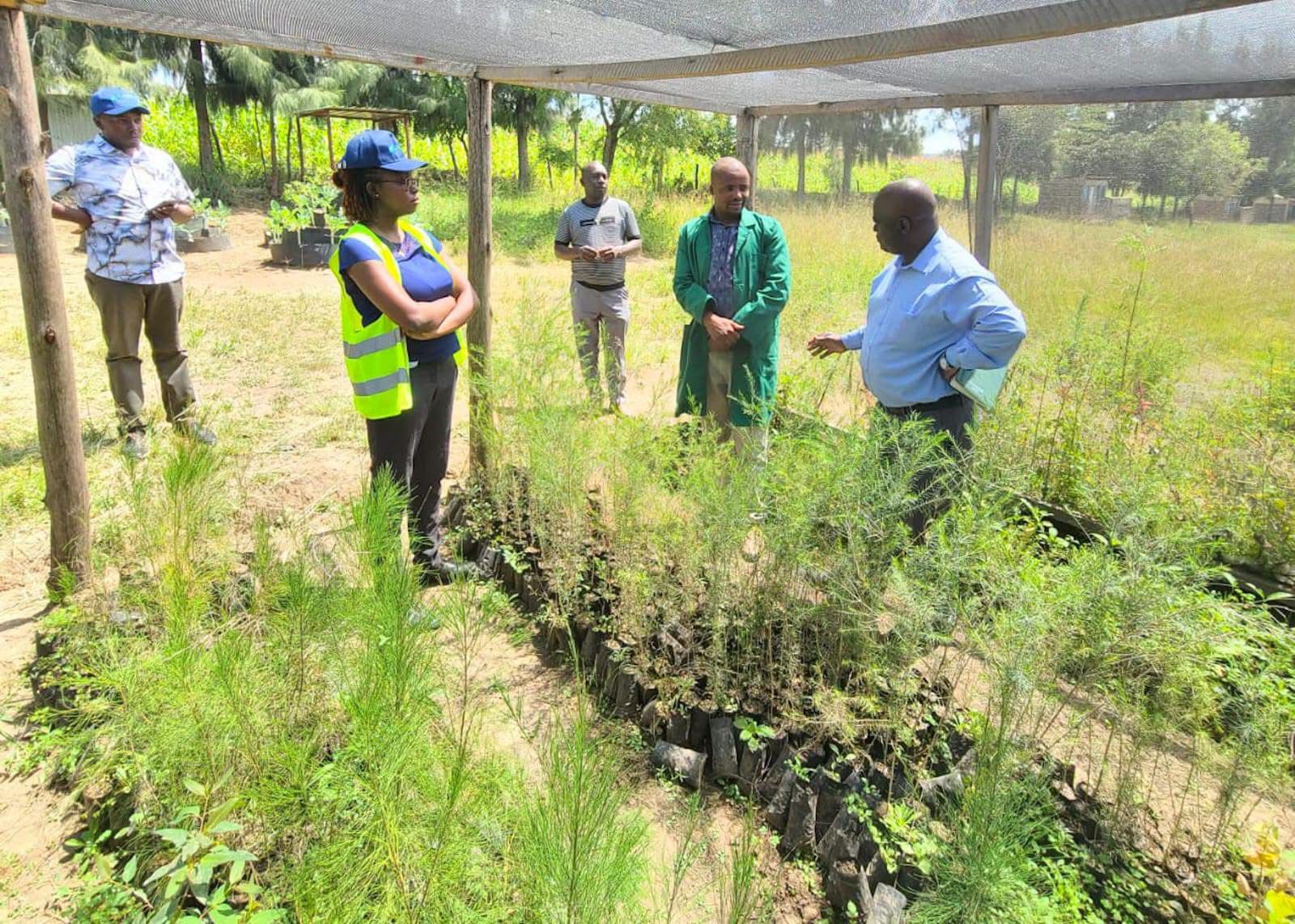
To assess the impact of the programme, the delegation conducted field visits to Elburgon Primary School in Elburgon Ward, Molo Sub-county, and the Lanet Umoja Community Tree Nursery. At both sites, community members, school representatives and environmental champions showcased tree nursery projects and restoration activities that are contributing to increased tree cover, environmental conservation and climate awareness. The visits demonstrated the growing role of schools and community groups as centres for conservation education, indigenous seedling production and landscape restoration.
While the programme has recorded notable achievements, stakeholders also identified challenges affecting the sustainability of community nurseries. These include inadequate water supply, limited access to indigenous tree seeds, pest and disease outbreaks, insufficient nursery infrastructure, shortages of tools and equipment, financial constraints, and challenges in seed collection and propagation. Community members also cited prolonged dry spells and declining water sources as significant barriers to seedling production, underscoring the need for continued technical support and investment.
Despite these challenges, the field visits highlighted the positive impact of FLLoCA investments in strengthening community-based climate action. Beneficiary groups reported improved nursery management practices, increased public participation in environmental conservation activities and enhanced awareness of climate change. Beyond producing tree seedlings, the nurseries are creating livelihood opportunities for youth and women, promoting sustainable land management and fostering greater community ownership of restoration initiatives.
The engagement concluded with a renewed commitment by both national and county governments to expand grassroots climate action through strategic partnerships and sustained investment, demonstrating how the FLLoCA Programme is supporting Nakuru County’s journey towards healthier ecosystems, resilient communities and a greener future.