
KERICHO SCHOOL TREE NURSERY INITIATIVE STRENGTHENS COMMUNITY CLIMATE ACTION UNDER FLLoCA PROGRAMME.
Efforts to strengthen climate resilience and environmental conservation under the Financing Locally-Led Climate Action (FLLoCA) Programme were highlighted during a consultative meeting in Kericho County that brought together national and county government officials, development partners and forestry experts to review progress in implementing community-based climate action initiatives.
The meeting was attended by County Environment and Climate Change officials led by Patrick Kirui, alongside Philip Akelo and Oscar C. Hansel. Also present were officials from the State Department for Forestry led by Robert Nyambati and Abraham Barsosio, as well as Selah Okoth representing the The National Treasury and Economic Planning under the FLLoCA Programme.
Discussions focused on advancing locally led climate action interventions through stronger community participation in environmental conservation, ecosystem restoration, water resource protection and sustainable tree-growing initiatives. Participants emphasized the importance of partnerships in achieving climate adaptation and mitigation objectives while exploring ways to improve access to quality planting materials, strengthen nursery management, promote indigenous tree species and support climate-smart livelihoods.
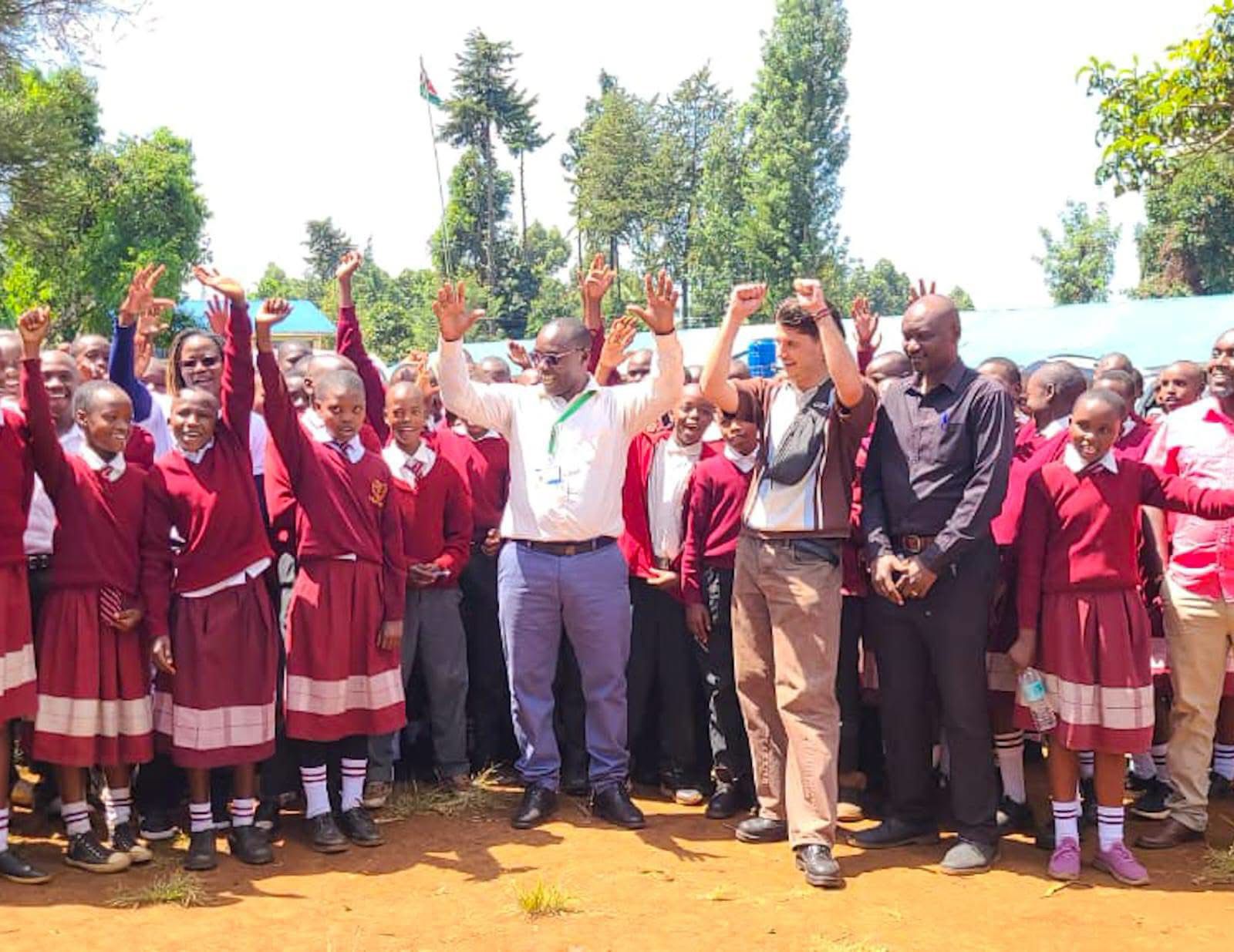
Following the meeting, the delegation visited the Kapkugewret Community Tree Nursery located at Keongo Comprehensive School in Kapkugewret Ward, where they were received by school representatives led by John Korir. The visit provided an opportunity to assess the school’s environmental conservation initiatives, including its tree nursery and water conservation project.
School officials reported that the institution has established a water project with a storage capacity of approximately 20,000 litres, providing a reliable source of water to support tree-growing and other conservation activities. The school has also implemented security measures to safeguard its environmental investments.
Through its conservation programme, the school is promoting bamboo and indigenous tree species as part of broader ecosystem restoration efforts. To date, approximately 800 seedlings, including cypress and indigenous tree species, have been planted, with plans to significantly expand production in support of county and national tree-growing targets.
The delegation noted that support from development partners, including the provision of water storage facilities, has strengthened the school’s conservation programme. School management, however, called for additional partnerships to help scale up environmental activities, including the establishment of an arboretum and the introduction of an “Adopt-a-Tree” initiative aimed at encouraging learners to take personal responsibility for nurturing trees while enhancing environmental awareness.
Participants also identified several challenges affecting the sustainability of school-based nurseries, including limited access to indigenous tree seedlings and bamboo seed, pest and disease management, seed collection and propagation, nursery management constraints, inadequate resources, drying water sources and concerns over inappropriate tree species selection. The meeting emphasized the need for continued technical support and investment to enable schools to play a greater role in ecosystem restoration.
The visit concluded with a practical tree-planting demonstration led by Dr. Nyambati, who guided learners on proper site preparation, planting techniques, spacing, watering and post-planting care to improve seedling survival and growth.
The hands-on session equipped students with practical conservation skills while reinforcing the importance of environmental stewardship. It also highlighted the FLLoCA Programme’s commitment to empowering schools and local communities to drive ecosystem restoration, strengthen climate resilience and contribute to Kenya’s national target of growing 15 billion trees by 2032.